The Mental Health Benefits of Climbing

Indoor Activities for Kids in Hampshire: The Ultimate Guide

Release the endorphins with climbing

Release the endorphins with Climbing

Climbing is often recognised for its physical benefits. It can get the body moving, challenge muscles, improve coordination and encourage an active lifestyle. But there is much more happening than simply reaching for the next hold.

The mental benefits of climbing can be just as rewarding. From focusing your attention on the next move to experiencing the satisfaction of reaching the top of a wall, climbing gives your mind plenty to work on too.

At Rock Up, our climbing sessions are designed to be fun, active and challenging for climbers aged 4 and over. Whether you're trying climbing for the first time, competing with friends or building your confidence on the walls, every climb presents an opportunity to set yourself a challenge and see what you can achieve.

Of course, climbing is not a replacement for professional mental health support where that is needed. However, like other forms of physical activity, getting active and taking part in an activity you enjoy can support your overall wellbeing. And for many climbers, the combination of movement, concentration, challenge and social interaction is what keeps them coming back.

So, what are some of the mental health benefits of wall climbing?

More than just a workout

When you're climbing, it can be difficult to think about much else.

You need to consider where your hands and feet are going, how you're going to move your body and which hold you'll reach for next. That combination of concentration and physical movement can make climbing feel completely different from a traditional workout.

Rather than simply counting repetitions or staring at the clock, you're solving a problem as you climb. Every wall presents a new challenge, and every successful route can bring a real sense of achievement.

Here are some of the ways climbing can support mental wellbeing.

Stress relief

Take a break from everyday distractions


Modern life can be busy. Adults might be thinking about work, family responsibilities or a never-ending to-do list, while children and teenagers can be dealing with school, homework and the pressures of everyday life.

Climbing gives you something else to focus on.

When you're halfway up a wall, your attention is naturally drawn towards your next move. Where does your foot go? Which hold can you reach next? How can you move your body to make the route easier?

That doesn't necessarily mean every other thought instantly disappears, but an engaging activity can provide a useful break from everyday distractions.

For children especially, climbing can offer a chance to step away from screens and get involved in something active. Instead of sitting down and passively watching something, they're moving, making decisions and concentrating on what is happening in front of them.

At Rock Up, our climbing sessions give children aged 4 and over the opportunity to tackle a wide range of climbing challenges in one session. With different walls to try, there is plenty to keep climbers engaged and moving.

Improved focus and mindfulness

Improved focus and mindfulness

Climbing demands attention.

To complete a route, climbers need to stay aware of their body position and plan their next move. This can encourage them to focus on what they are doing right now rather than worrying about what happened earlier or what might happen later.

In that sense, climbing can have similarities with mindfulness. You're concentrating on the present moment: your hands, your feet, your breathing and the next hold.

Children can benefit from this too. Climbing encourages them to pause, assess a challenge and make a decision. Sometimes the best way to reach the top isn't to rush. It might mean stopping, looking around and working out a better route.

That combination of physical movement and concentration makes climbing an activity that exercises both the body and the mind.

Build confidence and resilience

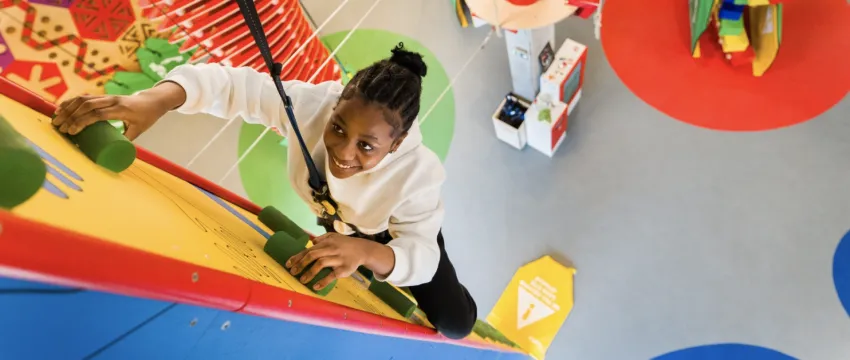
One of the most rewarding parts of climbing is seeing someone achieve something they didn't think they could do.

Perhaps they were nervous about leaving the ground. Maybe they reached a difficult section of the wall and wanted to give up. Or perhaps they simply decided to try a route that looked a little too challenging.

Then they make one more move.

And then another.

Eventually, they reach the top.

Those moments can help children and adults develop confidence because they provide something tangible: a challenge was presented, effort was required and progress was made.

Small achievements - big confidence

ou don't have to complete the tallest or most difficult wall in the centre to experience a sense of achievement.

For a first-time climber, simply getting a few feet off the ground might be a major step. For someone who has climbed before, the next challenge could be reaching a new height or completing a wall they previously found difficult.

The beauty of climbing is that everyone can define success differently.

At Rock Up, climbers can choose from a variety of challenges and climb at their own pace. This means children don't need to compare themselves with everyone else. They can focus on improving their own confidence and celebrating their own progress.

For children who are naturally shy or cautious, achieving something on the wall can be particularly satisfying. They have made the decision to try, pushed themselves a little further and discovered that they are capable of more than they first thought.

That sense of achievement can help build self-esteem over time.

Learning to try

Not every climb will go perfectly.

Sometimes you won't reach the top on your first attempt. You might slip, struggle to reach a hold or realise halfway through that your original plan isn't working.

And that's okay.

Climbing encourages problem-solving and persistence. Rather than treating an unsuccessful attempt as the end of the challenge, climbers can step back, think about what happened and try again.

Maybe a different route will work. Maybe they need to position their feet differently. Maybe they simply need another go.

This is one of the reasons climbing can be such a valuable activity for children. It gives them a fun environment in which they can experience challenge, make mistakes and continue trying.

The goal isn't always to get everything right immediately. Sometimes the real achievement is having the confidence to give something another go.

Social climbing

Social climbing

Connection and healthy competition

Although you can focus entirely on your own climb, climbing is also a brilliant activity to enjoy with other people.

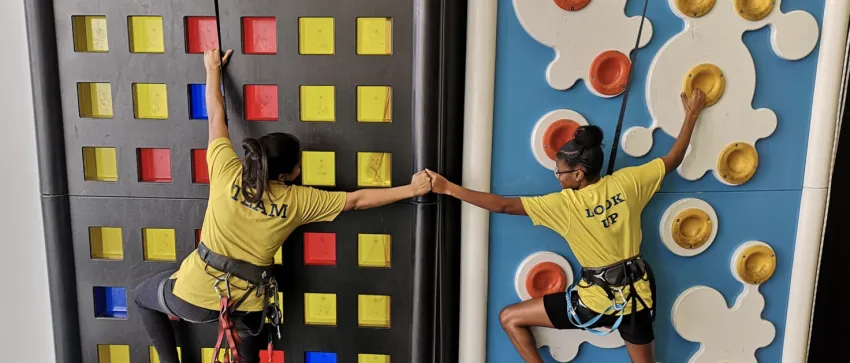
Families can encourage each other from the ground. Friends can challenge each other to try different walls. Children can celebrate together when someone reaches the top for the first time.

That shared experience can make climbing even more enjoyable.

Climb together with friends and family

At Rock Up, climbing is something children and families can enjoy together. You don't need to be an experienced climber to support someone else, either.

Sometimes encouragement from the ground is enough to help a nervous climber take the next step.

A simple "you can do it" can go a long way when someone is deciding whether to try one more move.

Climbing can also give children an opportunity to interact with others who enjoy the same activity. This can be particularly valuable for children who are looking to try something new, build confidence in social situations or simply spend time with friends away from school.

For families, it can also be a refreshing alternative to activities where everyone does their own thing. Instead, you're sharing an experience, encouraging one another and celebrating achievements together.

Compete with friends

Collaborate and earn points with Interactive Climbing

For climbers who enjoy a little extra challenge, our Interactive Climbing experience adds another layer to the adventure.

Rather than simply climbing to the top of a wall, climbers search for hidden boxes positioned around the climbing arena. Each box can earn points, turning the experience into an active challenge where climbers can compete against friends or work together in teams.

This introduces another mental element: strategy.

Which wall should you tackle next? Where might the hidden boxes be? Should you focus on finding as many as possible or work with your team to build the highest score?

For children who enjoy games and competition, Interactive Climbing can make every session feel different. It encourages climbers to stay active while also thinking, exploring and making decisions.

And because teams can work together, it can also encourage communication and collaboration.


To experience our Interactive Climbing, book our Explorer Climb

Mood boost, screen-free

mood boost, screen-free

Exercise can have a positive effect on mood, and climbing is certainly an active way to get moving.

Climbing uses the whole body while keeping your mind engaged, making it feel more like an adventure than a traditional exercise session.

Like other forms of physical activity, exercise can trigger the release of endorphins — chemicals associated with feelings of pleasure and wellbeing. Regular physical activity is also widely recognised as an important part of maintaining overall health.

But there is another reason climbing can feel good: fun.

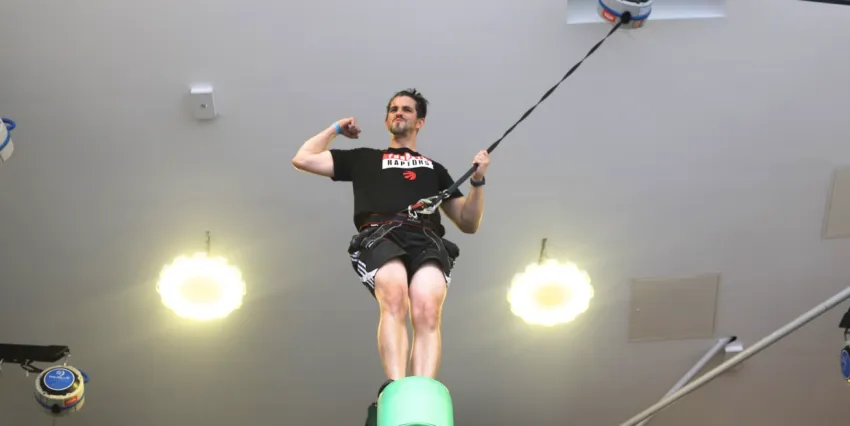
You're not simply exercising because you feel you have to. You're chasing the next challenge, ringing the bell at the top of a wall, trying to beat your friend's score or seeing whether you can find one more hidden box.

For many children, that makes a big difference. The activity itself is the motivation.

They are getting active without necessarily thinking of it as "exercise".

A screen-free way to get active

Screens are part of modern life, but children also benefit from opportunities to move, play and engage with the world around them.

Climbing provides a highly active alternative.

Instead of sitting still, children are stretching, reaching, balancing and making quick decisions. They're also responding to what is physically in front of them rather than simply watching something happen on a screen.

This doesn't mean climbing has to replace every other hobby. But adding a regular active activity to the week can give children something completely different to look forward to.

Whether they climb once in a while as a family activity or become regular visitors, the combination of physical movement and mental challenge can help make climbing an enjoyable part of an active lifestyle.

Frequently asked questions

What are the mental benefits of climbing?

Got questions? FAQs

Standard Climbing is available for age 4 and up with fun routes designed for all sizes. Our Toddler Climb & Play tickets are suitable up to 5 years.
Check out our options in your local centre to see more info.

Yes. Rock Up is perfect for first-time climbers!

· Our climbing walls are progressive, from easy beginner zones to more technical routes.

· Our team is on hand to brief and assist you.

· We also offer NICAS climbing courses for 4-5 years and 6-12 years for those who want to progress.

Yes! Climbing is only part of the adventure at Rock Up!
We also have:

· Multi-storey Soft Play areas for younger children

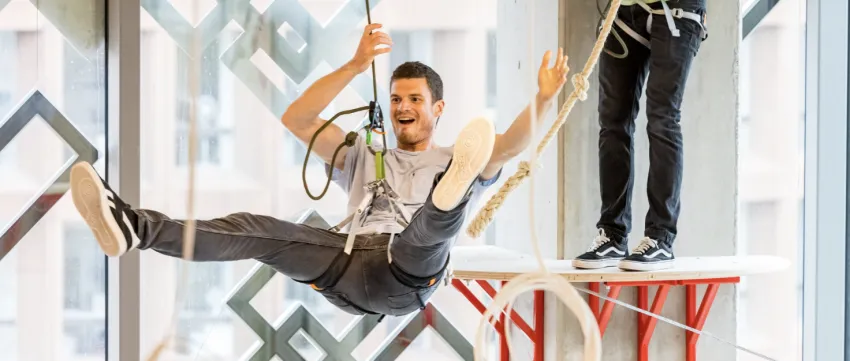
· Towering Vertical Challenges like the Stairway To Heaven, Leap Of Faith, Vertical Dropslide, Treadmill Wall & Traverse Challenge.

· Party areas for memory-making birthdays

· Snack zones to refuel after climbing


And the best part — all activities are indoors, so you can plan a climbing session, soft play or birthday party all year round, whatever the weather.


Check out the activities at your local centre for more information.

For safety reasons, we need a minimum of 1 adult in the arena for every 4 children (12 and under). You can either purchase an Adult Climb ticket to climb with them, or cheer them on from inside the arena with our Ringside Adult ticket.

You do not need to purchase an Adult climb or Ringisde adult ticket if:
> You are a Rock Up Member
> Your child is 12 or older
> Your child is attending an Academy class
> You are only purchasing a soft play ticket, a Toddler Climb ticket, an SEN ticket or a birthday party.

Climbing Sessions at Rock Up last around 90 minutes*. The first half hour is for the guests to arrive and receive their safety briefing. The following 55mins are spent in our climbing arena. However, you can purchase an additional 30mins of climb time online or during your session.
Soft Play sessions are stay and play sessions during the week in term time. Meaning you can pay once and play all day! At the weekends and during school holidays our soft play sessions typically last for 2 hours. Parties** at Rock Up last 2 hours in total. The first 30 minutes is for guests to arrive and receive their safety briefing. The following hour is spent on their activity and the final 30 minutes is spent in the party area where they can enjoy a mountain of refreshments.


Timing vary for Meadowhall, please see their specific FAQ's for exact timing
Except Meadowhall where the session is 60 minutes
Subject to availability

It’s quick and simple:

  1. Choose your Rock Up location

  2. Select your activity — Wall climbing, Soft Play, birthday party, etc.

  3. Pick your time slot

  4. Pay online and receive your confirmation email

No. Everything you need to enjoy our wall climbing is included. We provide the harness, and that’s all you need. Just wear comfortable clothing.
You will be unable to climb in climbing shoes, high heeled shoes or open-toe footwear.

Absolutely - safety is our top priority for all ages.


We use automatic belay devices to keep you secure. Climbers clip in to access the wall, allowing them to climb safely and descend gently. With a weight range of 35lbs to 287lbs, they ensure a smooth experience for climbers of all shapes & sizes.

Our team members explain everything during a mandatory safety briefing before entering the climbing area and monitor safety throughout the session. Parents can relax - everything’s designed for children to feel confident and secure.

If you have more questions, please contact us..

Contact us

Who is wall climbing for?

One of the best things about climbing is that you don't need to arrive as an experienced athlete.

At Rock Up, our standard climbing sessions are suitable for climbers aged 4 and over, making them a great option for children, families and groups looking to try something active.

Every climber can approach the walls differently.

Some children will immediately race towards the tallest challenge in the arena. Others might prefer to start slowly and build their confidence one wall at a time.

Both approaches are completely fine.

Climbing for children aged 4 and over

For children aged 4 and above, climbing can offer a mixture of fun, physical activity and mental challenge.

They can learn to assess routes, think about their next move and develop confidence as they progress. There is also the simple joy of setting a challenge and trying to reach the top.

Because our climbing arena includes a variety of different challenges, children can choose walls that feel right for their confidence and ability.

For first-time climbers, that might mean starting with a wall that looks approachable. As their confidence grows, they may decide to try something bigger, steeper or more challenging.

Toddler Climb & Play: two activities in one session

Children aged 4 and under can enjoy our Toddler Climb & Play sessions.

These sessions give younger children the chance to experience climbing and soft play during the same visit, combining two different types of active play in one session.

This can be ideal for young children who are still discovering what they enjoy. They can try climbing in an age-appropriate setting, then continue the adventure in our soft play area.

Soft play is perfect for younger children who want to crawl, climb, explore and play at their own pace. Combined with climbing, it gives little adventurers a varied and active session without requiring parents to choose between the two.

For families with younger children, Toddler Climb & Play can therefore offer an introduction to climbing while still providing plenty of familiar opportunities for free play.

SEN-Friendly climbing sessions

We run a quieter SEN-Friendly session once per month for autistic climbers.

These sessions are designed to provide a quieter opportunity to enjoy climbing, with the aim of making the Rock Up experience more comfortable for climbers who may find a standard busy session overwhelming.

For children and families, having access to a session specifically designed around a quieter environment can make it easier to try climbing, build confidence and enjoy the activity in a setting that better suits their needs.

As availability and session arrangements can vary by centre, it's always best to check your local Rock Up for the latest details and upcoming session dates.

Home-education sessions

Our home-education sessions offer another way for children to experience the benefits of getting active.

These sessions give home-educated children an opportunity to work towards their PE goals while also meeting other children, parents, carers and like-minded educators.

Climbing can be particularly useful as a varied form of physical activity because it encourages movement while also involving concentration, coordination and problem-solving.

For home-educating families, the social element can be just as important. A shared session provides an opportunity to get together, try something active and connect with others in the home-education community.


To find out more about what sessions we offer, select your closest Rock Up location below.