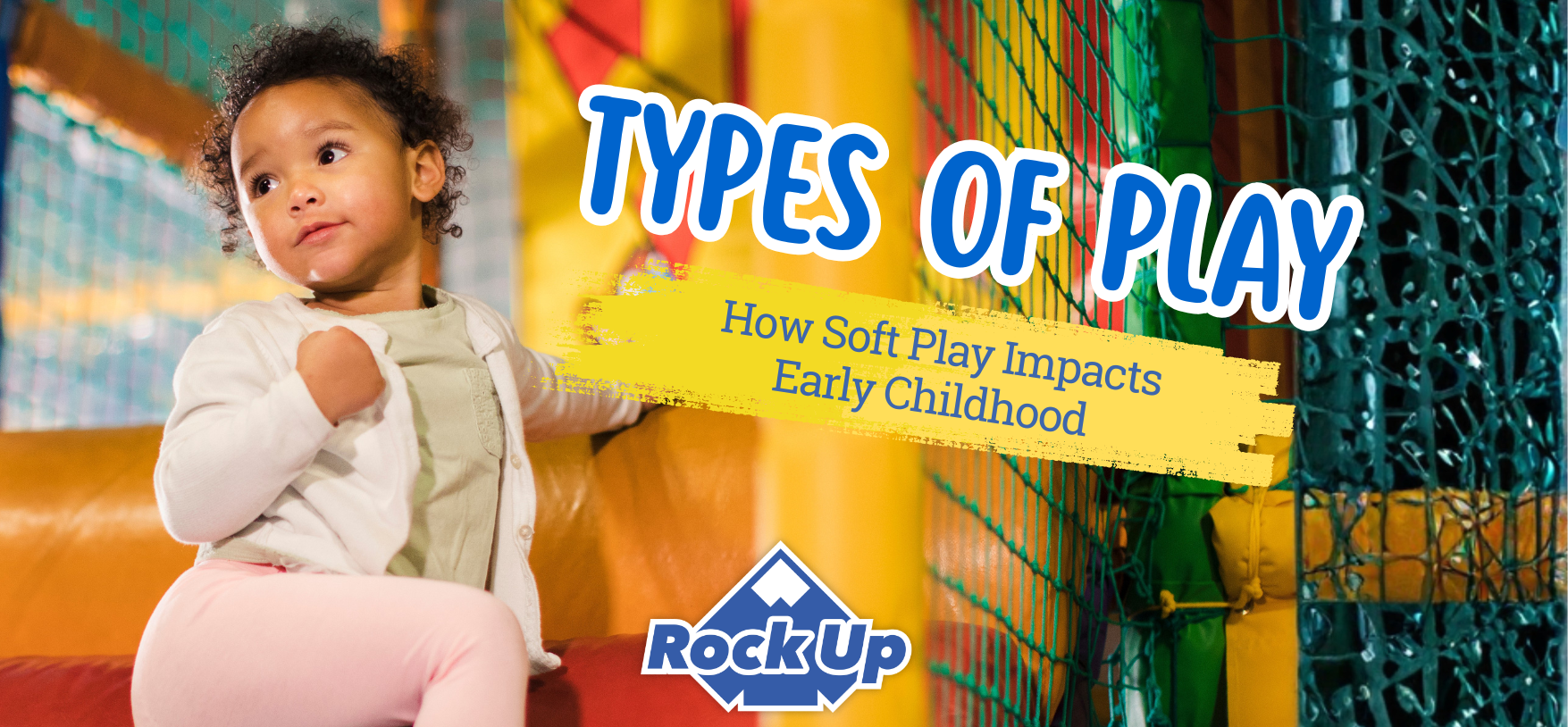
Types of Play and How Soft Play Can Impact Early Childhood Development
Play is not just fun. It is one of the most important parts of early childhood development.
For parents of babies, toddlers and pre-school children, understanding the different types of play can help you make informed decisions about your child's growth. Especially in the early years before school, play shapes confidence, communication skills, physical development and social understanding.
At Rock Up, our soft play areas within our climbing centres are designed to support these essential stages.
If you would like to book a soft play session,choose your local centre and book your session online.
What Are the Different Types of Play in Early Childhood?
Experts often describe several key types of play that contribute to development in children under five. Each type supports a different area of growth.
Physical Play - Physical play involves movement, coordination and active exploration. Climbing, crawling, sliding and balancing all fall into this category. It's all about strengthening muscles, improving balance and developing gross motor skills. Physical Play is very prominent in soft play! With plenty of safe obstacles, your child will be using their muscles constantly.
Social Play - Social play happens when children interact with others. This might involve playing alongside another child, taking turns or beginning to cooperate in simple games. This is the type of play where children learn important skills such as sharing, empathy and communication. Within a soft play setting, social play is so prominent. With plenty of other children sharing the space, turn-taking and interaction are happening all the time.
Imaginative Play - Imaginative or pretend play allows children to explore ideas and roles. This might include pretending to be explorers, superheroes or shopkeepers. Imaginative play builds creativity, language skills and problem-solving abilities. This one usually involves more input from the parents, at least at first. But the number of times we see children building “boats”, playing in their “house”, and hiding from a “monster” in our soft play areas just shows the power of soft play for imaginative play.
Sensory Play - Sensory play engages touch, sight, sound and movement. Textures, colors and different surfaces stimulate a child's senses and encourage curiosity. Sensory experiences are particularly important for babies and toddlers who are learning about the world through touch and movement. Within our soft play areas, there is plenty to see and feel. Perfect for exploring the senses.
How Soft Play Supports Physical Development in Toddlers and Pre-School Children
Soft play centres are specifically designed to encourage safe physical exploration. At Rock Up, our soft play areas include padded climbing frames, tunnels, slides and obstacles that allow children to move freely in a secure environment.
Climbing over soft obstacles helps to:
Develop gross motor skills.
Improve coordination and balance.
Build strength in legs and core muscles.
Increase spatial awareness
For young children who are not yet at school, these skills are foundational. They prepare the body for everyday tasks such as walking confidently, running, jumping, and even sitting upright at a desk.
Parents searching for soft play centres near them are often looking for a safe space where children can burn energy while developing physically. Soft play at Rock Up offers exactly that.
Find your local Rock Up soft play area and book your tickets today.
The Impact of Soft Play on Social Skills and Confidence
Soft play is also a powerful social environment.
When children explore a soft play centre, they encounter others their age. They practice waiting for their turn on the slide, navigating shared spaces and interacting with unfamiliar children.
These early social experiences build confidence. A toddler who successfully climbs a small frame and reaches the top gains a sense of achievement. When they smile at another child or receive encouragement from a parent, that confidence grows further.
For children who are not yet in nursery or school, soft play can be an important stepping stone towards group environments.
Why Soft Play Is Important Before Starting School
The early years are critical for brain development. Experiences during this period shape how children learn and interact later in life.
Soft play supports:
Listening skills through following simple instructions
Risk assessment in a controlled setting
Independence when exploring away from a parent for short periods
Emotional resilience when trying again after small challenges
These experiences prepare children for the structure and expectations of school life. When parents search for the benefits of soft play for toddlers, they are often thinking about readiness for nursery or reception. Regular visits to a well-designed soft play centre can gently build the skills needed for that transition.
Indoor Soft Play in the UK as a Safe and Weatherproof Option
In the UK, the weather can limit outdoor play. Rainy days and colder months often mean children spend more time indoors.
Indoor soft play centres provide a reliable, year-round solution. At Rock Up, families can enjoy a clean, secure environment where children can stay active regardless of the weather.
This consistency is important. Regular physical activity supports healthy growth, better sleep and improved mood in young children.
Book your soft play session today and avoid a rained-off outdoor play date!
Visit Your Local Rock Up Soft Play Center
If you are searching for soft play near you or looking for ways to support your toddler's development before school, Rock Up offers welcoming soft play facilities across multiple UK locations.
Our centers are designed with safety, cleanliness and child development in mind. Whether you are planning a regular weekly visit, meeting friends or organising a special treat, our soft play areas provide a stimulating and supportive environment.
Give your child the freedom to explore, climb and grow in confidence. Book your session today and discover how the right kind of play can make a lasting impact on early development.